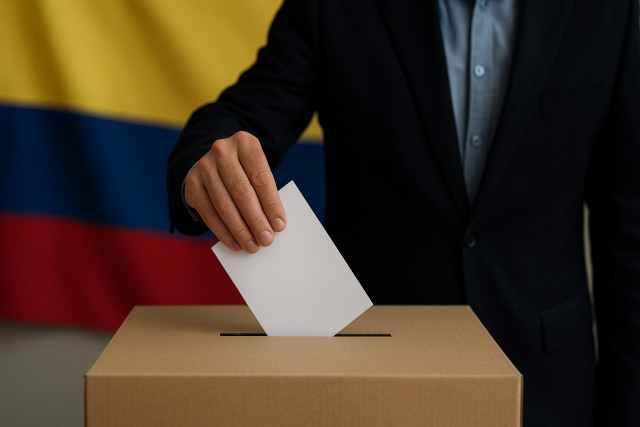
When are the 2026 presidential elections in Colombia?
The 2026 Colombian presidential elections represent one of the most pivotal moments for the country's democratic future. This process, which takes place every four years, calls millions of citizens to the polls to elect the successor to the current president and define the nation's course on economic, social, and security issues. According to current regulations and Colombian electoral tradition, the first round of these elections will be held on the last Sunday of May 2026.
It is essential that citizens pay close attention to the official schedule issued by the National Civil Registry. If no candidate obtains a majority of the valid votes in the first round, a second round of voting will be held three weeks later, generally in mid-June. This two-round system ensures that whoever wins the presidency has majority support and solid legitimacy among the population. To plan accordingly, many citizens consult the 2026 Colombian work calendar in advance to organize their trips to the polling places.
How the voting system works in Colombia
The Colombian electoral system is direct and secret. Every citizen over 18 years of age who possesses a valid national identity card has the right and the duty to participate in the election of the president and vice president. The 2026 presidential election process in Colombia is governed by the 1991 Constitution, which establishes a four-year presidential term with no possibility of immediate reelection—a reform that sought to balance power and allow for democratic alternation.
On election day, voters receive a ballot containing the photographs and names of the candidates, along with their respective vice-presidential running mates. The option to cast a blank ballot is also included, a legitimate political tool that allows citizens to express their dissatisfaction with the proposed candidates. If blank ballots were to win in the first round, the election would have to be repeated with different candidates, demonstrating the power of popular will in the country.
Requirements to be a presidential candidate
To be eligible for the highest office in the Colombian government in the 2026 presidential elections, candidates must meet strict requirements defined by law. First, they must be Colombian citizens by birth and in good standing. Additionally, they must be over 30 years of age at the time of the election. Those convicted of crimes affecting state assets or who hold high-level public office within the year prior to the election are ineligible to run.
Candidates can be endorsed by legally recognized political parties or through the collection of signatures by significant groups of citizens. This latter mechanism has gained popularity in recent decades, allowing independent figures to enter the electoral race. As the public debate progresses, some sectors are even analyzing technological trends, as mentioned in the article about the most suitable presidential candidate for Colombia in 2026 according to AI , reflecting how innovation permeates current politics.
The role of the National Civil Registry
The National Registry is the entity responsible for organizing, directing, and overseeing the 2026 presidential elections in Colombia. Its work begins well before election day, with the verification of the voter registry and the logistics for distributing election kits to the most remote areas of the country. Transparency is the cornerstone of its operations, ensuring that every vote is counted accurately by poll workers, who are citizens randomly selected to supervise the polling stations.
Election calendar and key dates for voters
The road to Colombia's 2026 presidential elections formally begins a year in advance with the opening of voter registration. This process is vital for those who have changed their place of residence or for young people who will be voting for the first time. Registration allows citizens to be assigned a polling place near their home, facilitating the exercise of their right to vote. It is important to remember that voting is not only a responsibility, but also a way to honor the freedom commemorated on national holidays such as July 20th in Colombia .
- Voter registration period: Generally one year before the election.
- Candidate registration deadline: Approximately three months before the event.
- Start of election propaganda in mass media: Two months before the vote.
- First round day: Last Sunday of May 2026.
- Second round date (if applicable): June 2026.
In addition to these dates, citizens should be aware of the dry law periods, which prohibit the sale and consumption of alcoholic beverages during election weekend to ensure public order. These restrictions are part of non-working days in Colombia and differ from official holidays , since although Sunday is a day of rest, election day makes it a day of intense civic activity.
Importance of the second round in the democratic process
The second round, or runoff election, is an essential feature of the 2026 Colombian presidential elections. Its purpose is to prevent a president from being elected with a very narrow base of support in a multi-candidate scenario. By pitting the two candidates with the most votes against each other, it forces the formation of coalitions and programmatic agreements that represent a broader segment of society. This mechanism strengthens institutional stability, as the eventual winner typically enjoys the support of diverse political sectors united by a shared vision for the country.
Historically, runoff elections in Colombia have been highly charged political battlegrounds, where televised debates and last-minute proposals sway undecided voters. In 2026, economic recovery, energy transition, and a comprehensive peace process are expected to be the key issues that tip the scales between the finalists.
Citizen participation and the youth vote in 2026
One of the biggest challenges of the 2026 Colombian presidential elections is reducing voter abstention. Traditionally, a significant portion of the eligible voting population does not go to the polls, leaving important decisions in the hands of a minority. However, in recent years there has been a resurgence of youth voting. Newer generations, more connected and aware of global issues, are using social media to stay informed and mobilize.
The Colombian government is offering incentives to those who participate in the 2026 presidential elections, such as discounts on passport processing, reduced military service time, and priority in civil service competitions. These benefits aim to foster a culture of active participation from an early age, based on the understanding that democracy is built on everyone's opinion.
Political and social challenges for the next presidential term
Whoever wins the 2026 presidential election in Colombia will face a complex landscape. The country is undergoing profound transformations that require leadership capable of uniting a polarized society. Among the most urgent challenges are reducing inequality, improving the quality of public education, and strengthening the healthcare system in rural areas. Likewise, managing citizen security and combating drug trafficking will remain priorities on the national agenda.
Foreign policy will also play a crucial role, especially in relations with neighboring countries and strategic trading partners. The next president will have to navigate a volatile international environment, always seeking the benefit of Colombians and the protection of the country's natural resources, which are among the most biodiverse in the world.
Differences between legislative and presidential elections
It is common for citizens to confuse the electoral processes that occur in the same year. In 2026, prior to the 2026 Colombian presidential elections, legislative elections will be held to elect the members of the Senate and the House of Representatives. While the legislative elections determine who will make the laws and exercise political oversight, the presidential elections determine who will execute the budget and lead the armed forces.
Voting in both elections is crucial, as a president without congressional support will struggle to pass reforms. Therefore, voter education is key to ensuring that voters understand their participation in the March elections (legislative) is just as important as their vote in the May elections (presidential).
How to find your polling place for 2026
To facilitate the voting process for the 2026 Colombian presidential elections, the National Registry has enabled digital tools where, by simply entering their national identification number, citizens can find their assigned polling place and voting table. It is recommended to check this several days in advance to avoid system congestion on election day. Additionally, it is advisable to verify if you have been appointed as a poll worker, as failure to fulfill this duty may result in significant fines.
On election day, polling stations typically open at 8:00 am and close promptly at 4:00 pm. It is advisable to arrive early, bring your original identification document, and bring your own pen if you prefer, although polling stations always provide the necessary materials. The transparency of the process depends largely on citizen oversight and respect for the established rules for this democratic exercise.