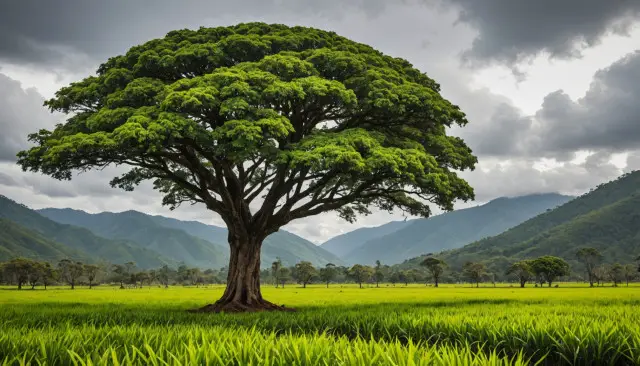
What is celebrated on Tree Day in Colombia in 2026?
Tree Day in Colombia 2026 will be celebrated on April 29th, a date that takes on unprecedented relevance in the current environmental context. This commemoration is not just a symbolic reminder, but an urgent call to action to protect the natural heritage of one of the world's most biodiverse countries. In a year where climate challenges have dominated the national agenda, this celebration seeks to raise awareness among the population about the need to restore forest ecosystems, which are fundamental for regulating the water cycle and conserving wildlife.
Unlike other countries that celebrate this date at different times of the year, Colombia chose April 29th to coincide with periods that historically favor planting thanks to the rainfall patterns in various regions. To understand how this date fits into the annual landscape of festivities and commemorations, it is helpful to review what is celebrated in Colombia each month of the year , which allows us to see the transition from cultural celebrations to those of an environmental and educational nature.
History and origin of Tree Day in the country
The institutionalization of this date in Colombia dates back to the mid-20th century. It was through Decree 1104 of 1941 that the celebration of Tree Day was formally established. Originally, the intention of the government at the time was to foster a forestry culture in a nation that was beginning to see the effects of colonization and agricultural expansion on its primary forests. Over the decades, the commemoration evolved from a simple school event to a state policy involving regional autonomous corporations, municipalities, and non-governmental organizations.
Historically, trees have been a symbol of freedom and life in Colombian culture. From the "trees of liberty" planted during the independence era to the centuries-old ceiba trees that grace the main squares of towns in the Caribbean region and the Santander departments, these living structures tell the story of the country. In 2026, this story continues to be written with a focus on resilience, seeking to ensure that every citizen understands that planting a tree is an act of environmental sovereignty and generational responsibility.
Importance of reforestation in the Colombian ecosystem
Colombia possesses nearly 10% of the planet's biodiversity, and much of that richness resides in its forests. From the rainforests of the Chocó biogeographic region to the cloud forests of the Andes Mountains, trees perform vital functions that extend far beyond oxygen production. They capture carbon from the atmosphere, helping to mitigate global warming, and act as natural sponges that prevent floods and maintain river flow during droughts.
Reforestation by 2026 has become an absolute priority due to the intensity of recent climate events. To better understand the current climate context, it is vital to review the impact of the extreme El Niño phenomenon in Colombia , which has put thousands of hectares of native forest at risk due to wildfires and water scarcity. Planting native trees helps restore soil moisture and create biological corridors for endangered species such as the spectacled bear and the jaguar.
Native species that define national biodiversity
When participating in Tree Day in Colombia 2026, it is essential to prioritize native species over introduced ones. Exotic species, such as eucalyptus or pine, although they grow quickly, can deplete local water resources and do not provide the same support for local wildlife. Among the species recommended for planting this year are:
- Wax Palm (Ceroxylon quindiuense): The national tree of Colombia, vital to the cloud forest ecosystem and home to the yellow-eared parrot.
- Guayacán (Handroanthus chrysanthus): Famous for its spectacular yellow or pink blooms that announce the changing of the seasons.
- Andean Oak (Quercus humboldtii): An essential species for the protection of watersheds in the high mountain areas.
- Ceiba (Ceiba pentandra): Sacred tree for many indigenous cultures, capable of reaching impressive heights and storing large amounts of water.
- Myrtian (Myrcianthes leucoxyla): Very common in the Bogotá savanna and surrounding areas, ideal for urban restoration and feeding small birds.
How to participate in planting days this April 29th
Citizen participation is the driving force behind Arbor Day. For 2026, various ways for Colombians to get involved in the environmental cause have been organized. The Regional Autonomous Corporations (CARs) typically lead the 'Great National Tree Planting Marathon,' where public lands are designated for mass planting. Those interested can register through the websites of their respective municipalities or environmental authorities to receive training and resources.
In addition to in-person events, many organizations allow for "virtual planting" or tree sponsorship. Through donations, citizens and companies fund the planting and maintenance of trees in hard-to-reach areas such as the Amazon or the Sierra Nevada de Santa Marta. This date joins other environmental initiatives, such as the ideas for ecological celebrations for Earth Day in Colombia , which is celebrated just a few days earlier, creating a week entirely dedicated to reflection and action for nature.
Recommendations for planting a tree correctly
Planting a tree isn't simply digging a hole and placing a plant; it requires technique to ensure the tree's long-term survival. Here are some essential steps:
- Site selection: Ensure the location has sufficient space for the growth of the roots and the crown of the mature tree, away from electrical wires or pipes.
- Soil preparation: The hole should be at least twice as wide and deep as the bag or pot the tree came in. This makes it easier for the new roots to penetrate the soil.
- Organic fertilizer: Mix the excavated soil with compost or organic fertilizer to provide initial nutrients.
- Removing the bag: Be very careful not to break the soil block (the soil structure surrounding the roots) when removing the plastic.
- Initial watering: Immediately after planting, apply plenty of water to eliminate air pockets in the soil and ensure contact of the roots with the moist soil.
The impact of climate change and the El Niño phenomenon on forests
The year 2026 has witnessed extreme climate variability that has directly impacted the health of our forests. The high temperatures recorded in the first months of the year have left the soils parched and the vegetation vulnerable. Therefore, Tree Day in Colombia 2026 focuses not only on planting trees, but also on the conservation of existing forests that have survived the heat waves.
Protecting riparian zones is now more critical than ever. Trees growing along riverbanks and streams act as thermal barriers, preventing excessive water evaporation. In regions like Tolima, Huila, and the Eastern Plains, where the sun's impact has been most severe, communities are organizing to create microclimates by planting shade-producing species that protect crops and livestock, demonstrating that ecology and the economy can go hand in hand.
Educational activities for schools and companies
The education sector plays a fundamental role in transmitting environmental values. During the week of April 29th, thousands of educational institutions in Colombia carry out cross-curricular projects where students learn about botany, biogeochemical cycles, and the importance of ecosystem services. These activities often include the creation of school nurseries, where children care for seedlings from seed until they are ready to be transplanted.
On the other hand, the private sector has integrated Tree Day into its Corporate Social Responsibility (CSR) programs. Many companies take advantage of this date to hold corporate volunteer days, taking their employees to rural areas to participate in the restoration of degraded ecosystems. This commitment to nature is also reflected in the new trends of sustainable tourism in Colombia in 2026 , where travelers seek experiences that include offsetting their carbon footprint through the planting of native trees in the destinations they visit.
The most emblematic forests that we must protect in Colombia
Celebrating Tree Day is also about recognizing the majesty of the natural sanctuaries that the country still possesses. Colombia has protected areas that are true lungs for the continent. Chiribiquete National Natural Park, with its tepuis and ancient rainforests, is perhaps the most magnificent example of what a pristine forest ecosystem means. Protecting these places from illegal deforestation and extensive cattle ranching is a task that requires the support of all sectors of society.
In the Andean region, the cloud forests of the Cuchilla de San Juan Nature Reserve and the Iguaque Flora and Fauna Sanctuary are vital for the water supply of cities like Bogotá and Tunja. Every tree planted in the upper watersheds contributes to the water security of millions of people. Therefore, April 29th is an opportunity for city dwellers to look to the mountains and understand that their well-being depends directly on the health of these trees, which, though distant, sustain urban life. The invitation for 2026 is to transform outrage over deforestation into concrete action, sowing life and hope in every corner of the country.