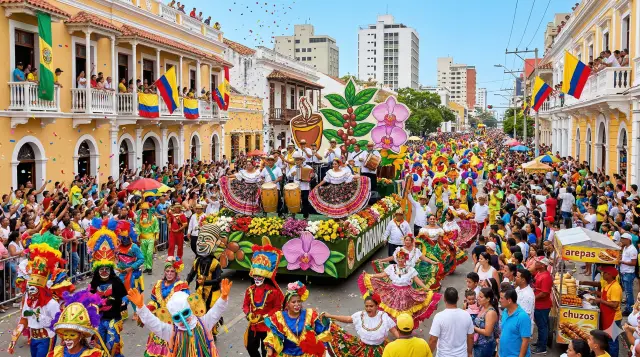
Festivals and fairs in Colombia represent the vibrant essence of entertainment and national identity. Throughout the country, each department and municipality organizes celebrations that not only commemorate historical or religious events but also become the epicenter of music, dance, gastronomy, and social gatherings. By 2026, the festive calendar promises a packed schedule of events that attract both locals and international tourists, solidifying Colombia's position as a leading destination for cultural and entertainment tourism. Participating in these festivities is to immerse oneself in a universe of diversity. From the Caribbean coast to the Andes Mountains, Colombian festivals and fairs offer a variety of experiences ranging from monumental parades to world-class concerts. These celebrations are fundamental to understanding the country's idiosyncrasies, as they bring together the Indigenous, African, and Spanish heritages that have shaped the nation. Furthermore, they offer a unique opportunity to enjoy the talent of local and national artists on public and private stages. ## Importance of Fairs and Festivals in Colombia for National Entertainment The entertainment sector in Colombia reaches its peak activity during regional festivities. These dates are not only days of rest or commemoration, but also drive a massive industry that includes event production, logistics, commerce, and hospitality. Fairs and festivals in Colombia function as a vital economic engine for the regions, allowing small and large cities to showcase the best of their tourist and cultural offerings. For the public, these celebrations represent an opportunity to disconnect from routine and enjoy high-quality entertainment. The program often includes beauty pageants, which have significant cultural relevance in Colombia, as well as horse parades, livestock fairs, orchestra festivals, and craft exhibitions. The entertainment spills out into the streets, where joy is contagious and the sense of community is strengthened. It is common to see cities completely transformed, decorating their avenues and preparing their plazas to welcome thousands of visitors. ## Main Regional Festivals that Mark the Colombian Calendar When planning a trip or looking for entertainment options, it's essential to know which events are the most outstanding. Each region has its own crown jewel, celebrations that have been declared National Cultural Heritage or even World Heritage Sites by UNESCO. These festivities reflect a tradition that refuses to die and adapts to the times by incorporating technology and modernity into its performances. ### The Barranquilla Carnival and its Impact on Caribbean Identity Without a doubt, the Barranquilla Carnival is the biggest party in Colombia. For four days, the city comes to a standstill to make way for the Battle of Flowers, the Grand Parade of Tradition, and the Festival of Orchestras. The entertainment here is non-stop; cumbia, mapalé, and garabato music fills the air, while iconic characters like the Marimonda, the Monocuco, and King Momo interact with the crowds. For those seeking to experience Caribbean culture at its finest, the Barranquilla Carnival 2026 (program, history, and tourist attractions) is a must-see. This event is not just about dancing; it's a display of cultural resilience. Folkloric groups rehearse year-round to deliver a flawless performance. Carnival entertainment in Barranquilla extends to the famous "verbenas," popular neighborhood parties where "picós" (giant sound systems) get everyone dancing to the rhythm of tropical and African music. ### The Flower Festival in Medellín: A Display of Color and Paisa Tradition. In August, the capital of Antioquia dresses up for the Flower Festival. This event is the ultimate symbol of Paisa culture and the pride of the silleteros, farmers who carry enormous floral arrangements on their backs. Entertainment at this festival includes the Silleteros Parade, the National Trova Festival, and massive concerts with international artists. The [Feria de las Flores 2026 en Medellín programa de parades y guía turístico](https://www.calendariodecolombia.com/blog/feria-de-las-flores-2026-en-medellin-programacion-desfiles-y-guia-turistica) offers details on how to enjoy this city, renowned for its innovation and hospitality. In addition to the official events, the festival allows you to explore Medellín's nightlife, visit nearby towns, and savor local cuisine, such as the bandeja paisa. It's a time when entertainment blends with nature, as orchid and bird exhibitions are a key part of the program. ### The Blacks and Whites Carnival in Pasto: A Jewel of Southern Colombia In the first days of January, the city of Pasto celebrates one of the most unique festivals on the continent. The Blacks and Whites Carnival is an explosion of creativity where local artisans create gigantic floats with animated figures that seem to come to life. The entertainment centers around play; Blacks' Day and Whites' Day, where people paint their faces with cosmetics and throw talcum powder, symbolizing equality and fraternity. This festival is one of the first major events of the year on the Colombian calendar of fairs and festivals. It is an immersive experience where the spectator is not a passive observer, but becomes a protagonist of the celebration. Andean music and the rhythms of southern Colombia accompany each parade, creating an atmosphere that is both mystical and joyful. ## How Entertainment is Experienced at Festivals in the Interior of the Country The interior of Colombia, with its mountains and valleys, also offers large-scale events. The Manizales Fair, known as the "City of Open Doors," kicks off the year with a program that includes the bullfighting season, the International Coffee Queen Pageant, and numerous cultural events. It's a fair with a European flair blended with Andean warmth, where entertainment is experienced intensely in its steep streets and main squares. Meanwhile, the Folkloric Festival and National Bambuco Pageant in Neiva is the most important celebration in the department of Huila. Here, the Sanjuanero dance takes center stage. Entertainment revolves around the aquatic parades on the Magdalena River and the dance galas where the national queen is chosen. It's a perfect opportunity to learn about the traditions of Greater Tolima and enjoy string music and typical cuisine like Huila-style barbecue. ### The Vallenato Legend Festival in Valledupar: For music lovers, the Vallenato Legend Festival is the ultimate event. Valledupar becomes the stage where the best accordion players, drummers, and guacharaca players compete for the title of Vallenato King. The entertainment here is purely musical; vallenato parties last until dawn, and the concerts at the Parque de la Leyenda Vallenata (Vallenato Legend Park) bring together the biggest stars of the genre. It's a celebration of the poetry and spirit of the Colombian Caribbean. ### The San Pacho Festival in Quibdó and the Joy of the Pacific In the department of Chocó, the San Pacho Festival in honor of Saint Francis of Assisi showcases the rich cultural heritage of the Afro-Colombian population. The entertainment is embodied by the "chirimías," musical groups that play fast and lively rhythms with wind and percussion instruments. The parades of troupes through the neighborhoods of Quibdó are an explosion of color and energy, demonstrating that fairs and festivals in Colombia are also spaces for asserting and celebrating ethnic pride. ## Calendar of Fairs and Festivals in Colombia by Region To make sure you don't miss any of the entertainment options the country offers, it's helpful to categorize events by natural regions. This makes planning tourist routes easier and allows you to understand the cultural differences that make Colombia such a diverse country. ### Unmissable Events in the Andean Region The Andean region is the most populated and, therefore, has the largest number of fairs and festivals in Colombia. In addition to those mentioned in Medellín and Manizales, the following stand out: * **Bogotá Summer Festival:** Held in August, it offers a wide range of sporting activities, concerts, and recreational events in the capital's parks. * **Cali Fair:** Known as the "Branch of Heaven," Cali celebrates its fair at the end of December, where salsa reigns supreme. The Salsódromo is the most anticipated entertainment event, with hundreds of professional dancers parading along the Autopista Sur (Southern Highway). * **International Joropo Tournament in Villavicencio:** Although it's located in the transition zone to the Eastern Plains, it's a key event for the central region of the country, where the zapateo dance and harp music take center stage. ### Featured Celebrations in the Caribbean Region The Caribbean isn't just Barranquilla and Valledupar. Other important festivities include: * **Sea Festival in Santa Marta:** A celebration that highlights the city's relationship with the ocean, including nautical competitions and parades. For more information, see the [Sea Festival 2025 Program in Santa Marta](https://www.calendariodecolombia.com/blog/programacion-fiestas-del-mar-2025-en-santa-marta). * **Cartagena Independence Day:** In November, the heroic city celebrates its independence with the National Beauty Pageant and popular parades that fill the city walls with music. * **Cumbia Festival in El Banco, Magdalena:** An event dedicated to preserving Colombia's most representative rhythm. ## Recommendations for Enjoying Regional Entertainment Safely Attending fairs and festivals in Colombia requires good planning to ensure a pleasant experience. Since these events attract large crowds, it's important to follow some practical recommendations: 1. **Book in advance:** Hotels and transportation tickets often sell out months before the main dates, especially for events like the Barranquilla Carnival or the Flower Festival. 2. **Take care of your health:** Staying hydrated, using sunscreen, and wearing comfortable clothing is essential, as many of these festivals involve long walks or being in the sun for hours. 3. **Personal safety:** Although authorities increase security, it's advisable not to carry unnecessary valuables and to always keep an eye on your belongings in crowded places. 4. **Respect traditions:** Each festival has its own customs. For example, at the Black and White Carnival, playing with talcum powder and paint is part of the tradition and should be accepted with good humor. Entertainment at these festivities has also gone digital. Many fairs now have official apps where you can check the schedule in real time, event maps, and emergency services. Being connected allows you to make better use of your time and not miss the main events. ## The Role of Gastronomy in Colombian Celebrations You can't talk about entertainment and fairs without mentioning food. Every festival is a showcase for regional cuisine. At fairs and festivals in Colombia, typical dishes are an essential part of the sensory experience. From lechona (roasted suckling pig) at the Tolima festivals, to mote de queso (a type of corn and cheese soup) at the bullfights in Sucre, to roasted guinea pig in Nariño, food unites people and celebrates the country's biodiversity. Food festivals are often held alongside the main activities. These spaces allow visitors to sample local delicacies prepared by traditional cooks, adding educational and cultural value to the entertainment. Furthermore, the rise of haute cuisine in Colombia has led many renowned chefs to participate in these fairs, creating modern fusions of ancestral dishes. ## Economic and Tourism Impact of Festivals in Colombia Fairs and festivals in Colombia are a pillar of regional development. During these times, thousands of direct and indirect jobs are generated. The entertainment sector, which includes everyone from musicians and dancers to sound technicians and street vendors, benefits from the constant flow of visitors. Domestic tourism is boosted, as Colombians take advantage of long weekends to travel to other regions and experience their traditions. By 2026, the country's tourism infrastructure is expected to be even stronger, allowing for better connectivity between major cities and the towns where the most traditional festivals take place. The support of the government and private entities is crucial to maintaining the quality of these events and ensuring they remain a benchmark for safe, family-friendly entertainment. Fairs and festivals in Colombia are not just a pause in the calendar; they are the living expression of a country celebrating its history and looking optimistically toward the future.
Fairs and Festivals in Colombia 2026: A Complete Guide to Regional Entertainment and Culture
Te puede servir:
Consulta el calendario 2026 de Colombia con todos los festivos oficiales, o revisa ya el calendario 2027 para planificar el próximo año.