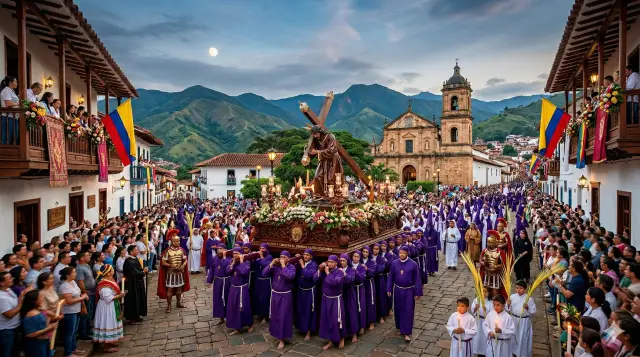
Holy Week in Colombia is one of the most significant times for the country's cultural and religious identity. During these days, millions of citizens and international visitors immerse themselves in an atmosphere of reflection, faith, and tradition that extends from the major cities to the most remote villages across the nation. This period, also known as Holy Week, is not only a time of spiritual reflection for the Catholic community but also represents one of the most important tourist seasons, boosting the recognition of historical and architectural sites that are part of the nation's heritage. In 2026, Holy Week will be celebrated between the end of March and the beginning of April, marking a milestone in the country's calendar of events. Colombia's diversity allows this celebration to be experienced in many ways: from the solemn, centuries-old processions of Popayán, declared an Intangible Cultural Heritage of Humanity by UNESCO, to the riverside celebrations in Mompox or the massive displays of faith at the Las Lajas Sanctuary in Nariño. Understanding the depth of these customs is essential for anyone interested in Colombian culture. ## When is Holy Week in Colombia in 2026 and why is it so important? The dates of Holy Week are determined by the lunar calendar, specifically by the first Sunday after the first full moon of spring in the Northern Hemisphere. In 2026, Holy Week in Colombia will begin on March 29 with Palm Sunday and end on April 5 with Easter Sunday. The official holidays, which allow for the mass movement of tourists, are Holy Thursday (April 2) and Good Friday (April 3). The importance of this period lies in the Hispanic heritage that shaped the country's beliefs. For centuries, religious institutions and brotherhoods have kept alive representations of the passion, death, and resurrection of Jesus Christ. Furthermore, Holy Week is a vital economic driver. As with the [Colombian Holiday Calendar 2026](https://www.calendariodecolombia.com/blog/calendario-de-feriados-en-colombia-2026), these days off are used by families to strengthen bonds and explore the country's natural beauty. ## Most Common Religious Traditions of Colombians During Holy Week Customs vary by region, but there are common elements that define the experience of the Colombian believer. Palm Sunday begins the week with the blessing of the palms. Although traditionally the wax palm (Colombia's national tree) was used, environmental campaigns have promoted the use of alternative plants or white handkerchiefs to protect the ecosystem of species such as the yellow-eared parrot. Holy Monday, Tuesday, and Wednesday are usually days of preparation and special masses. Holy Thursday commemorates the Last Supper and the washing of the feet. A deeply rooted tradition is the visit to the seven monuments or seven churches, where the faithful visit different temples to pray before the Blessed Sacrament. In cities with densely populated historic centers, such as Bogotá or Cartagena, this activity becomes a beautiful cultural and spiritual walk. Good Friday is the day of greatest reflection. The Stations of the Cross are performed, which in many neighborhoods and towns is a live reenactment with local actors. At three in the afternoon, the Passion of the Lord is commemorated, and at nightfall, the processions of the Holy Sepulchre take place, characterized by silence and solemnity. Holy Saturday is a day of waiting, culminating in the Easter Vigil, and on Easter Sunday, the victory over death is celebrated with bells and popular festivities. ## Main tourist destinations to experience Holy Week in Colombia Colombia offers a religious tourism route that rivals the best in the world. Each destination has a particular mystique that attracts different types of travelers. If you're planning your trip, it's essential to check what's celebrated in Colombia each month to understand the context of each region. Popayán, known as the White City, is the quintessential destination. Its nighttime processions have taken place almost uninterrupted since the 16th century. The bearers, who carry the heavy religious images on their shoulders, inherit this task from generation to generation, giving the celebration a unique sentimental and social value. Mompox, in the department of Bolívar, offers a different experience. Here, the processions have a particular rhythm, a step of two forwards and one backward, symbolizing the difficulty of the journey. The colonial atmosphere of this city on the banks of the Magdalena River transports visitors to another era, making Holy Week an immersive experience. In the south of the country, the Las Lajas Sanctuary in Ipiales is a site of massive pilgrimage. This church, built into a canyon, is considered one of the most beautiful in the world. During Holy Week, thousands of people cross the border from Ecuador or travel from the interior of Colombia to ask for favors or give thanks for miracles to the Virgin of Las Lajas. ## History of Holy Week in Popayán and its Famous Processions The history of the celebrations in Popayán dates back to the colonial era. The city was a key administrative and religious center, which allowed the most influential families to invest in sacred art brought from Spain and Quito. The floats, which are the wooden structures that support the religious images, are true works of art carved with meticulous detail. What makes Popayán special is the community organization. The Permanent Board for Holy Week ensures that every detail, from the floral arrangements to the order of the processions, is perfect. The children's processions, known as Little Holy Week, ensure that the tradition does not die out, allowing the youngest to learn the roles of bearers and incense bearers from an early age. This historical continuity is what allows the event to remain relevant in the face of emerging festivities in Colombia in 2025. ## How Holy Week is Celebrated in Mompox: A Journey to the Past. Mompox is a hidden gem where time seems to have stood still. During Holy Week, the city dresses up in its finest. Unlike other regions, in Mompox the processions have a more festive and popular character at certain times, although they maintain liturgical respect. The Mompox March is famous for its rhythmic cadence, accompanied by bands that play technically complex funeral marches. Another unique aspect of Mompox is the serenade to the deceased on Holy Wednesday. The inhabitants go to the municipal cemetery, decorate the graves with flowers and candles, and spend the night accompanying their loved ones with music. It is a demonstration of the close and respectful relationship Colombians have with death and transcendence, similar to other [All Saints' Day traditions in Colombia](https://www.calendariodecolombia.com/blog/tradiciones-del-dia-de-todos-los-santos-en-colombia). ## Typical Colombian Gastronomy During Holy Week Abstaining from red meat on Good Friday has given rise to a rich variety of dishes based on fish and vegetables. On the Caribbean coast, it is common to eat dried fish, bocachico (a type of fish), and the famous coconut rice. Traditional sweets are also prepared from fruits such as mango, corozo (a type of palm fruit), papaya, and mamey, which are shared among neighbors and family. In the interior of the country, Lenten stew and fish soup are the main dishes. In the Andean region, the preparation of seven sweets, which symbolize the sorrows of the Virgin Mary or the seven last words of Christ, is a must. These sweets often include arequipe (dulce de leche), figs, rice pudding, and pumpkin candy. Food at this time of year is not only sustenance but also a way for families to bond, reinforcing Colombian family traditions that are being lost. ## Cultural Activities and Sacred Music Concerts in Bogotá Bogotá, as the country's capital, offers a program that combines religious, academic, and cultural events. The Bogotá Sacred Music Festival is one of the most anticipated events, where churches, museums, and theaters open their doors for world-class concerts. Works by classical composers and contemporary liturgical music are performed, attracting a diverse audience that seeks aesthetic beauty beyond religious belief. Climbing Monserrate Hill is the most traditional activity for both locals and tourists. Thousands of people climb the pedestrian path as an act of penance or simply to enjoy the view of the city and visit the Sanctuary of the Fallen Lord. It is recommended to do this activity in the first days of the week to avoid the extreme crowds of Good Friday. ## Recommendations for traveling in Colombia during Holy Week If you plan to travel around the country during Holy Week 2026, planning is your best ally. As it is peak season, ticket and accommodation prices tend to increase significantly. It is recommended to make reservations at least four months in advance, especially in cities like Popayán or Mompox, where hotel capacity is limited. Regarding transportation, Colombian roads usually have very high traffic flow. The return plan, organized by the National Police, establishes schedules and one-way streets on main roads to facilitate the return of travelers. Always check road conditions and make sure your vehicle is in optimal condition. If you travel to rural areas, remember to respect local customs and maintain behavior appropriate to the solemnity of the religious ceremonies. ## The Cultural Impact of Holy Week on National Identity Beyond the rituals, Holy Week is a reflection of the resilience and faith of the Colombian people. In a country that has endured various conflicts, these spaces for encounter and collective reflection serve to strengthen the social fabric. The preservation of colonial sculptures, the maintenance of churches, and the transmission of liturgical chants are forms of cultural resistance in the face of globalization. Holy Week in Colombia 2026 will be an opportunity to rediscover the value of the sacred and the traditional. Whether participating in the processions, enjoying the gastronomy, or simply relaxing in the beautiful national landscapes, this period invites everyone to connect with the essence of what it means to be Colombian. The blend of fervor, art, and community makes this celebration, without a doubt, one of the most precious treasures of the national calendar.
Holy Week in Colombia 2026: Traditions, Religious Destinations, and Schedule
Te puede servir:
Consulta el calendario 2026 de Colombia con todos los festivos oficiales, o revisa ya el calendario 2027 para planificar el próximo año.