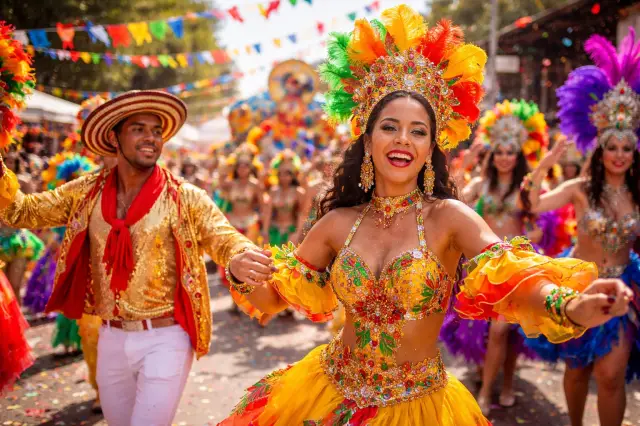
Carnival in Colombia is one of the country's most colorful and joyful celebrations. Each region has its own style and traditions, but they all share the same goal: to celebrate life with music, dance, color, and community.
If you've ever wondered how to organize a carnival party in your city , in this article you'll find a practical step-by-step guide to planning an event full of joy, culture and fun.
Importance of carnival in Colombian culture
Carnival is a living expression of Colombian cultural heritage. Festivities such as the Barranquilla Carnival , the Blacks and Whites Carnival in Pasto, and the Riosucio Carnival are recognized nationally and internationally.
Organizing a local version of carnival helps to keep these traditions alive and strengthen the cultural identity of the community.
Step 1. Define the objective and type of carnival
Before starting the organization, it is essential to define the purpose of the celebration.
Some ideas:
Promote local culture and citizen participation.
Promote tourism and the regional economy.
Raising funds for social or community causes.
Decide whether it will be a themed carnival (for example, ecological, children's or folkloric) or a traditional celebration with parades, troupes and live music.
Step 2. Create an organizing committee
No carnival party organizes itself. Form a team with defined roles:
General Coordinator: in charge of logistics and planning.
Cultural committee: selects the artistic groups, dances and troupes.
Financial committee: manages resources, sponsors and budget.
Safety committee: coordinates with local authorities and first aid.
Communications committee: manages social media, press and dissemination.
Having a committed group will guarantee the success of the event.
Step 3. Define the date and request permissions
Check the holiday calendar in Colombia at CalendarioDeColombia.com/blog to choose a strategic date, preferably a long weekend or a holiday weekend.
Then, process the municipal permits , such as:
Use of public space.
Permits for music, sales or parades.
Transit and security authorizations.
These procedures are essential to avoid penalties or inconveniences during the festival.
Step 4. Design the main route or scenario
If your carnival includes a parade of troupes , define:
The starting and ending point.
Spaces for the public and the artists.
Hydration stations, first aid and portable toilets.
If you are holding the event in an enclosed space , make sure you have a stage, sound system, lighting, and rest areas.
Tip: Use colorful, carnival-themed signage to guide attendees.
Step 5. Invite artists and cultural groups
The soul of the carnival lies in the music and dances. You can invite:
Local troupes and schools.
Traditional dance groups.
Music bands or DJs.
Craftsmen, painters and theater people.
Including different artistic expressions promotes cultural diversity and strengthens the sense of belonging.
Step 6. Find sponsors and allies
Organizing a carnival involves costs. Manage partnerships with:
Local businesses (bakeries, shops, restaurants).
Mayors' offices or secretariats of culture.
Private companies seeking brand visibility.
It offers benefits such as inclusion of the logo on posters, billboards or mentions during the event.
Step 7. Promote the carnival on social media and local news outlets
Communication is key. Use a mix of strategies:
Campaigns on Facebook, Instagram and TikTok with preparation videos.
Radio invitations and press releases.
Official poster with the artists and schedules.
Eye-catching hashtags, for example: #CarnivalInYourCity or #LiveTheCarnival .
Step 8. Look after the safety and well-being of everyone
A successful carnival is one that combines fun with responsibility .
Make sure you have:
Health and first aid brigades.
Information and customer service points.
Family spaces and rest areas.
Cleaning and recycling strategies.
It promotes an ecological and safe carnival , inviting the public to take care of the environment.
Step 9. Close with a symbolic or cultural act
To end the party, organize a closing ceremony . It could be:
A musical show featuring local artists.
The burning of the Old Year or lantern parade.
Award for the best group or costume.
This closing helps to reinforce the spirit of unity and tradition of the carnival.
Step 10. Evaluate and document the experience
After the event, convene the committee to evaluate:
What worked and what needs improvement.
How many people attended.
Economic and cultural impact.
Media and social media coverage.
Save photos, videos, and testimonials. These materials will be valuable for promoting future editions.
Extra tips for an unforgettable carnival
Use recyclable materials for costumes and decorations.
It includes a children's parade to promote family participation.
Create a mask or float contest.
It invites groups from other regions to exchange culture.
Frequently asked questions about how to organize a carnival
How much time does it take to plan a carnival?
Ideally between 3 and 6 months in advance, depending on the size of the event.
What permits are required?
You must process the permits for use of public space, transit, sound and sale of drinks or food.
What activities are essential?
Parade, music, traditional dances, local cuisine and awards.
Promote your culture, celebrate your people
Organizing a carnival party in your city is not just an event, but an opportunity to revive cultural identity and strengthen community unity.
Each color, dance, and drum represents the joy of Colombia.